 1:01
1:01Draw the decision before choosing the tool
Start with the workflow, human decisions and intended benefit.
Likely speaker
 SUMMIT & RESEARCH
Free short preview · Draw the decision before choosing the tool
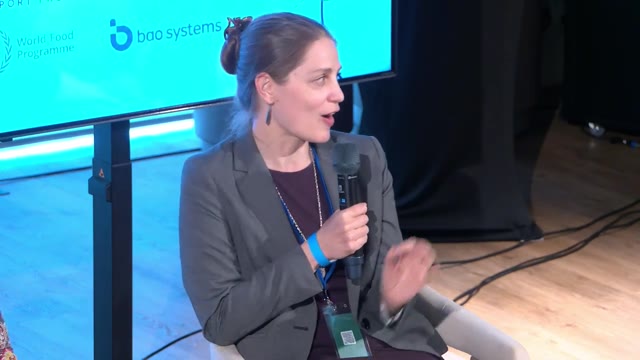
Session participants: Mathew Truscott; Emily Janoch; Mala Ram; Kristen Cordell. “The hard part is getting AI to work in an organisation.” The Reality of AI: Adoption, Capacity, and Change Management. ECOSYSTEM Summit, Barcelona, 16 September 2026. Session time 0:00–45:19. https://cs-ecosystem.commonshare.workers.dev/talks/ai-adoption-reality
An interpretation of the recorded conversation.
The panel moves from donor strategy to the operational and community conditions of AI use. Kristen Cordell describes GCC ecosystem grants and a strategy process that treats innovators as partners in shared uncertainty. These are organisational approaches and proposals, not an evaluation of changed power. Mala Ram reports a sharp gap between programme experimentation and legal, procurement, security and operational readiness at GOAL. Her account is a perspective from programme implementation; compliance staff are not separately interviewed.
Emily Janoch's CARE examples make the strongest distinction between extracting insights and returning decisions to affected people. Women Respond changed the problem from a presumed need for soap and masks to food and mobility constraints. A Nepal example shows local staff interpreting references to ashes that the technical analysis missed. Member checking, willingness to change and reducing the burden on health workers matter more than the mere existence of a feedback channel. Her advice to draw the decision process before opening a computer provides a practical mechanism for problem-led adoption and resilience to vendor changes.
The panel identifies permanent staff for monitoring, contextual adaptation and a route from pilot to sustained multi-country operations as funding gaps. An explicit challenge asks whether checking every answer eliminates promised time savings. GOAL's outbreak-response example reports that compliance changes initially removed essential functionality; this is a reported tension, not evidence that data protection should be bypassed. CARE's counterpoint is that collecting ethical, consented data without capacity to act can still waste participants' time. Legal definitions and regulatory timing in the exchange are not verified.
The Q&A also resists presenting unfinished tools as established successes. GCC describes an agent under construction and a funded pilot; the numerical grant comparisons in the transcript are inconsistent. CARE reports use of an evidence-review tool in programme design and a data-quality tool with an instructive false alarm caused by US phone-number assumptions in Colombia. Reported speed gains are not a measured net cost-effectiveness comparison. The close distinguishes safer experimentation with guardrails from blanket bans and recognises job insecurity as a live concern. This is a mixed practitioner panel, not independent impact evaluation.
1:01Start with the workflow, human decisions and intended benefit.