 2:57
2:57Where cooperative ownership stops
Overseas subsidiaries expose the limits and conditions of a shared-ownership model.
Likely speaker
 SUMMIT & RESEARCH
Free short preview · Where cooperative ownership stops
Session participants: Ander Etxeberria Otadui; Martin Smith. “How shared ownership works at industrial scale.” Ideology vs. Practice in Building the World’s Largest Federation of Cooperatives. ECOSYSTEM Summit, Barcelona, 17 September 2026. Session time 0:00–33:37. https://cs-ecosystem.commonshare.workers.dev/talks/mondragon-practice
An interpretation of the recorded conversation.
Ander Etxeberria Otadui describes Mondragon in a moderated conversation with Martin Smith. His explicit role is to explain the institution in which he lives and works; this is an informed institutional account, not an independent impact evaluation. The origin story emphasises a long period of education, organising and industrial experience before the first cooperative. It situates ownership in a regional productive ecosystem rather than treating legal incorporation as sufficient.
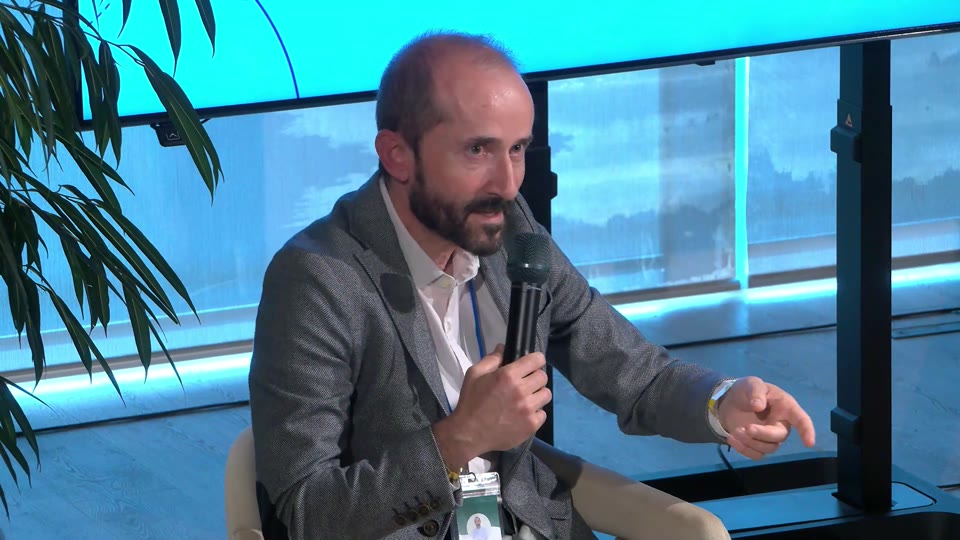
Concrete mechanisms include a credit cooperative combining finance with professional support; pooled group resources; worker-member voting on major annual decisions alongside delegated operational management; inter-cooperative transfers, training and income protection; and redistribution among cooperatives. Automation is embraced for competitiveness while the stated goal is to protect people through redeployment and training. Protecting workers is distinct from preserving every existing job or firm.
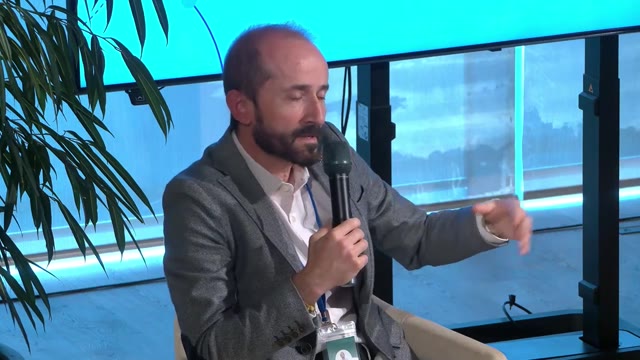
The international subsidiaries are explicitly acknowledged as non-cooperative, attributed to customer proximity requirements, legal differences and the time required to build a cooperative culture. The benefits and decision rights described for members do not necessarily extend to every overseas employee. The moderator asks about the failure of Fagor, but the answer moves into definitions and general support mechanisms; the specific failure is not actually reconstructed before the session ends.
The audience exchange warns against a worldwide federation sustained only by meetings and photographs and offers a second-hand failure story in which excessive distribution left inadequate business resources. Some of that explanation uses gestures ('this and this'); business/solidarity is explicit nearby, but precise visual referents require viewing. The final account of allocating surplus between community, workers and reserves clarifies the reinvestment mechanism. Regional income, unemployment, inequality, wage-ratio and scale claims are attributed figures, unverified here. They do not identify causal effects of cooperative ownership.
2:57Overseas subsidiaries expose the limits and conditions of a shared-ownership model.
 0:42
0:42MONDRAGON’s Ander Etxeberria Otadui describes training, transfers and supported retirement as responses to automation.