competition
Pressure from rival providers or enterprises shaping strategic choices.
 SUMMIT & RESEARCH
How do concentration, competition and practical alternatives shape room to act?
Pressure from rival providers or enterprises shaping strategic choices.
Concentration of market or technological power among a few actors.
Building or choosing institutional or technical options to dominant arrangements.
Cosmetic customisation alone does not establish an alternative institutional arrangement.
See an example →Explicit balancing of risk, opportunity, speed, cost or uncertainty.
A harm named without a choice or competing objective is unequal harms or reliability.
See an example → 2:57
2:57Overseas subsidiaries expose the limits and conditions of a shared-ownership model.
 2:36
2:36More complete checks can reveal problems while creating a commercial penalty for the verifier.
 3:33
3:33Local-model optimism meets a challenge about resources and bargaining power.
 0:42
0:42MONDRAGON’s Ander Etxeberria Otadui describes training, transfers and supported retirement as responses to automation.
 1:32
1:32Drawing on research in southern India, Rachel Coldicutt describes small enterprises building for specific languages, needs and levels of access.
 0:52
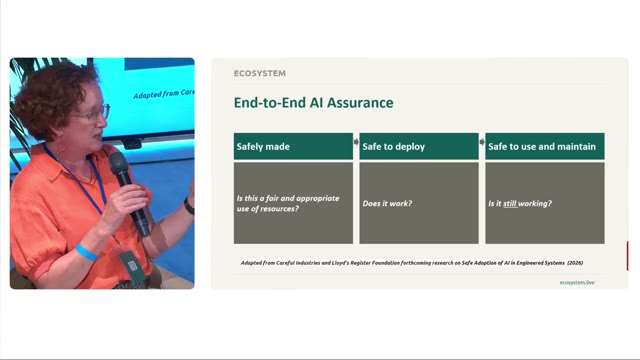
0:52Becky Faith argues that shrinking budgets and pressure to move quickly make research and equitable partnerships more important. She speaks in a personal capacity.
Themes can overlap. Counts describe this collection; they do not measure importance, agreement or prevalence outside the event.